A Demographic Turnaround in Kazakhstan: Why the Birth Rate is Falling and How It Will Change the Country's Economy
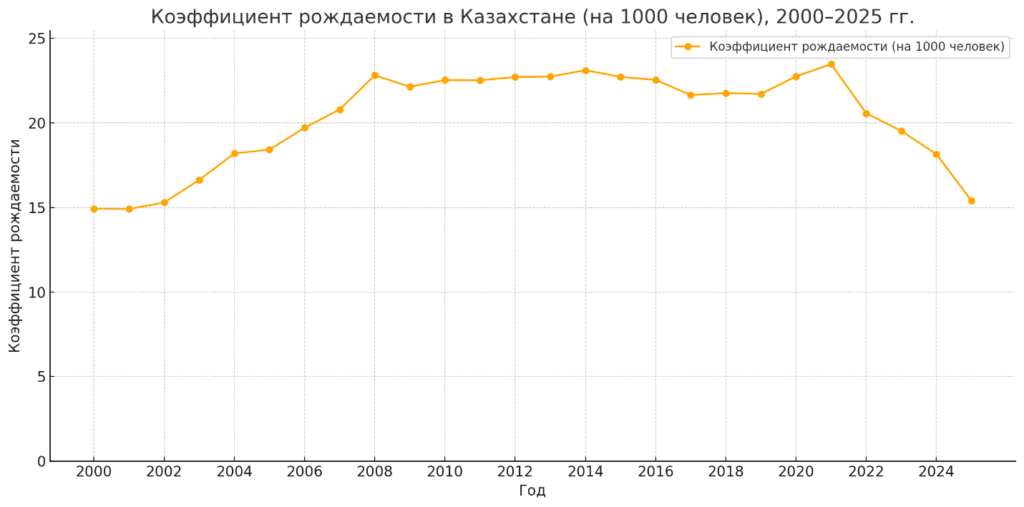
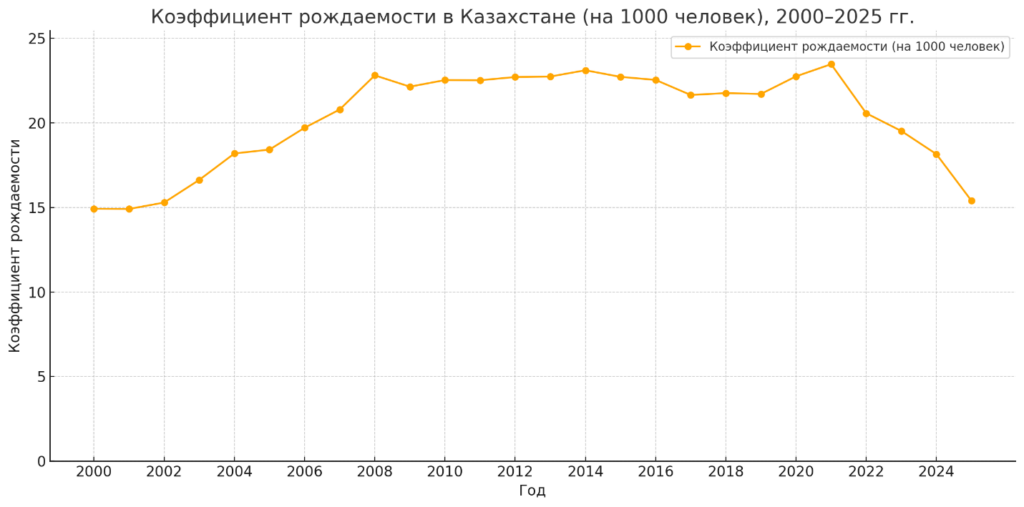
Statistics indicate a significant demographic shift. In the first quarter of 2025, Kazakhstan recorded a low birth rate of 15.39 per thousand people—the lowest since 2003. This current trend does not appear random: since 2021, the country's birth rate has been declining annually, and today we are witnessing a steady, systemic downward trend.
The material was prepared by Natalia Ospanova, President of the Kazakhstan Association of Professional Public Opinion and Market Researchers and Director of a group of research companies Alvin Market.
But there's much more hidden behind the dry numbers. For businesses and the government, these aren't just demographic statistics—they're a signal that the structure of demand, labor supply, the format of social spending, and the very logic of economic growth will change in the coming years.
Why is the birth rate declining?
An analysis of the situation shows that the decline in the birth rate is influenced by several interconnected factors, which can be roughly grouped into seven key areas.
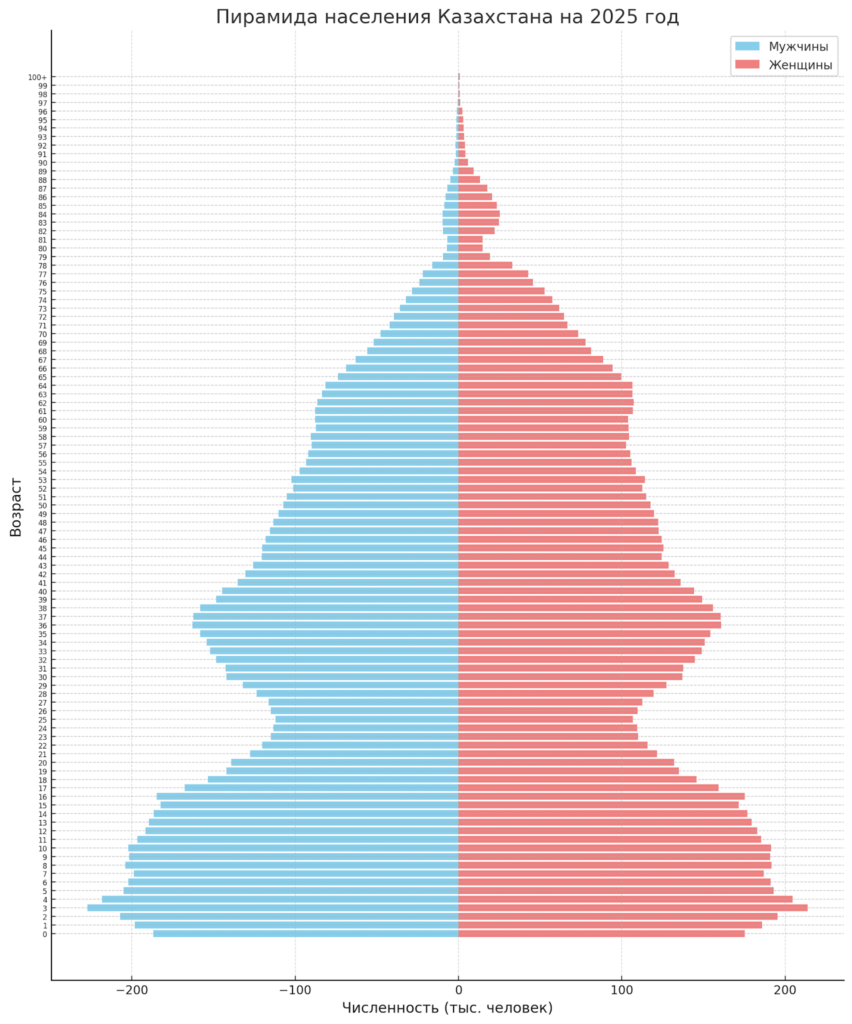
First - demographic. Kazakhstan has entered the so-called "echo phase" of the 1990s. Those entering childbearing age are those who were themselves born during the crisis: in the 1990s, the country experienced a socioeconomic shock, and the birth rate plummeted. We are now reaping its delayed consequences—there are simply fewer women and men physically capable of becoming parents. Even with the same family attitudes, this means an objective decline in the number of newborns.
The second factor is socio-economic. Young families are facing rising costs of living: housing, education, and healthcare are all rising faster than incomes. Insecure employment and the lack of guaranteed long-term income make investing in having and raising a child increasingly risky. For a woman or couple, the decision to have a child becomes an economic choice rather than a natural stage of the life cycle.
The third reason is - human capital drain. Kazakhstan continues to lose its youth: IT specialists, creative industry representatives, researchers, students, and even women of reproductive age are leaving. This not only represents a loss of taxpayers but also a reduction in the potential number of families who could have children in the country.
The fourth factor is value and behavioral shift. Kazakhstani society is becoming increasingly urbanized, and women are increasingly pursuing self-fulfillment through education, careers, and entrepreneurship. In the absence of mechanisms for combining motherhood and work (flexible schedules, official freelance status, or company-run daycares), many are postponing childbirth or consciously limiting family size. The ideal of having many children, characteristic of previous generations, is giving way to the model of "two or three children with a high quality of life.".
Fifth - marital instability. Marital instability, reflected not only in high divorce rates but also in a steady decline in the number of marriages. According to the Bureau of National Statistics, the marriage rate in Kazakhstan fell from 9.9 to 6.1 per 1,000 people between 2013 and 2024, effectively returning to levels seen in the early 2000s. At the same time, the divorce rate, despite a slight decline, remains stably high. While in the early 2000s, there was one divorce for every three registered marriages, over the past five years, there has been one divorce for every two marriages. This instability in family unions reduces the overall number of births: in single-parent families or after divorce, partners are less likely to choose to have children again. Thus, demographic pressure is generated not only by the refusal to have children but also by the destruction of the conditions under which children could be born.

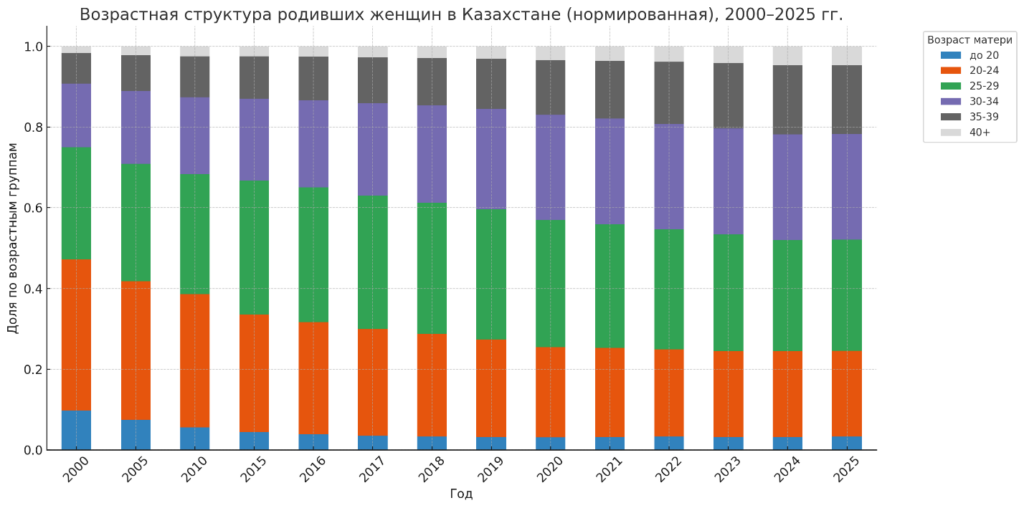
The sixth factor is shift in the age of maternal debut. The average age of Kazakhstani women having their first child is steadily increasing. While 10-15 years ago it was around 24-25, it is now approaching 27-28. In large cities like Almaty, it reaches 29. A later start to reproductive life means a shorter remaining fertile window and, consequently, a reduced overall number of possible births. Moreover, the later a woman decides to have her first child, the higher the risk of complications or the inability to have a second or third child.
Finally, the seventh factor is deterioration of reproductive health. According to the Kazakhstan Association of Reproductive Medicine, 16–17% couples suffer from infertility—this is above the critical level according to the WHO classification. The rise in infections, untreated illnesses, and late diagnosis only exacerbate the problem. It's no longer a question of "whether they want it or not"—many simply cannot conceive without medical assistance.
How will this affect the economy?
In the next 5-10 years:
The first sector where the decline in the birth rate will be felt most acutely will be the baby goods market. The decline in the number of newborns already means a drop in demand for diapers, strollers, food, and basic clothing. This trend will continue over the next five years. Businesses will be forced to reorient themselves to narrower niches.
The preschool and primary education sector will also face demographic pressure. Within 5-7 years, enrollment in the lower grades will begin to decline. Private kindergartens and schools focused on mass influxes may face capacity constraints.
In medicine, a contraction in the pediatric sector is expected, while demand for reproductive health services—IVF, genetics, gynecology, and andrology—will simultaneously increase.
In the long term (15–20 years):
The declining birth rate will inevitably lead to a reduction in the labor supply. As early as the 2040s, fewer people will enter the labor market than in the 2010s. This will put pressure on the wage bill, intensify competition for talent, and accelerate automation.
The consumer basket will also change. Kazakhstan will gradually shift from a "youth" consumption pattern to a "silver" one: the growing share of those 45+ will begin to shift the market's focus—from baby food and toys to nutraceuticals, health insurance, care services, and leisure.
The financial sector will also come under pressure. An aging population and declining employment will lead to increased pressure on the pension system. Without reforms to funded and voluntary pension mechanisms, a persistent pension fund deficit is possible by 2045.
Should we stimulate the birth rate?
The question is legitimate. Direct financial incentives are not a panacea. Global experience shows that childbirth payments alone, if not accompanied by systemic support, provide a short-term boost but do not reverse the trend.
Instead, the country needs new generation family policy. What does it mean?
- Affordable housing for young families – available for rent and mortgage.
- Flexible forms of employment and protection of women in the labour market.
- Support for working parents through crèche programs, after-school programs, and logistics infrastructure.
- Medical prevention and treatment of infertility.
- Supporting the role of fathers and fair distribution of parental responsibilities.
Is there reason for optimism?
There are quite a few of them.
Firstly, Kazakhstan remains a country with a relatively high reproductive potential. Family-oriented attitudes remain particularly strong among the Kazakh population. Research shows that the average desired number of children in Kazakh families is 2-3.
Secondly, the cultural role of the extended family, support from grandparents and relatives remains strong and can compensate for some institutional deficits.
Finally, technology—including in women's health, diagnostics, telemedicine, and IVF—is expanding opportunities for women who previously couldn't become mothers. This is especially relevant as the age of first-time mothers increases.
Conclusion
The birth rate is a mirror that reflects the entire society: its values, economy, politics, and level of trust in the future. Kazakhstan is currently experiencing not a crisis, but a transformation. And how the government and businesses respond to these demographic signals will determine whether this decline will become a long-term problem or a "breathing space" before a new round of growth.
The future of fertility isn't determined by benefits. It's determined by how comfortable, safe, and reasonable it is for families to live and grow up in the country.