Central Asia is not a single market: 10 mistakes companies make when entering Kazakhstan and Uzbekistan
Why some marketing strategies work in Kazakhstan while others fail in Uzbekistan, and what Alvin Market Research reveals about the region's real consumer patterns.
As Natalia Ospanova, head of the Alvin Market Research group of research companies and president of KAPIOR, noted, it is the illusion of similarities between Kazakhstan and Uzbekistan that often becomes one of the main pitfalls for international companies.
«"Many investors and brands enter Central Asia with the belief that Kazakhstan and Uzbekistan are practically a single market. Indeed, our countries share a common history, similar cultural codes, and high growth potential. However, behind this superficial similarity lie different consumer behavior patterns, values, and decision-making mechanisms. Therefore, strategies that work successfully in one country do not always yield the same results in another. In Central Asia, it's not enough to simply localize a product or translate communications into the local language—it's necessary to deeply understand the people, their lifestyle, motivations, and cultural context," notes Natalia Ospanova.
According to a study conducted by Alvin Market Research among urban and rural populations in Kazakhstan and Uzbekistan using telephone surveys, the differences between the two countries are much deeper than is commonly believed.
The main mistake businesses make is trying to view Central Asia through Russian, European, or American lenses. In practice, completely different decision-making, consumption, and demand-generation mechanisms operate here.
Mistake #1: Treating the consumer as an individual
In many countries, marketing is built around the individual: their needs, interests, and lifestyle. In Central Asia, this approach is only partially effective.
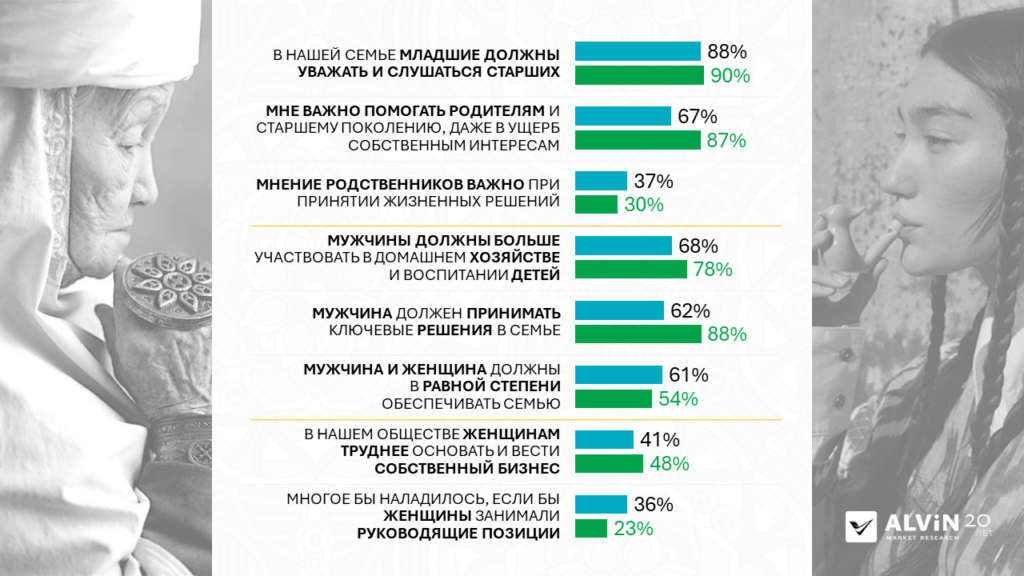
The study shows that consumers here are almost always part of a family system. Major decisions are made not in isolation, but with the input of spouses, parents, and older generations. This is particularly evident in Uzbekistan, where family ties remain a key factor in decision-making.
What this means for business is simple: when you sell to one person, you are actually dealing with an entire family.
Mistake #2: Considering young people only as students
In many countries, a young audience is associated with the period of study and relatively late family formation.
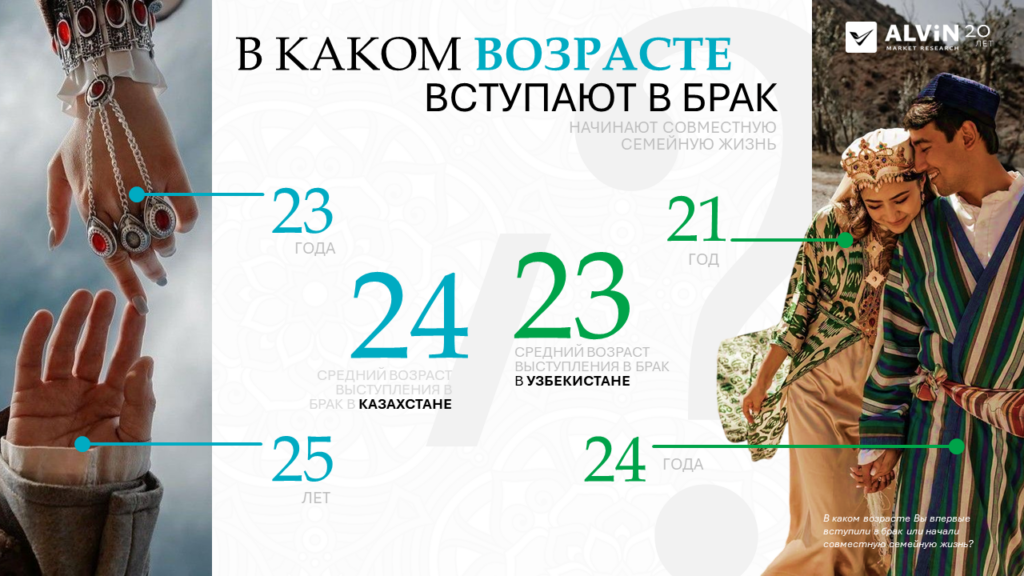
In Kazakhstan and Uzbekistan, the family life cycle begins significantly earlier. People marry early, have children almost immediately, and begin making important financial decisions. This means that demand for housing, household appliances, educational services, and financial products develops much earlier than many marketing models suggest.
If a company continues to view its 20-25 year old audience solely as students, it risks missing the real needs of this group.
Mistake #3: Underestimating the role of children
The region remains highly family-oriented. More than half of households are raising children, and childlessness remains extremely rare. However, most families would like to have more children than they currently have.
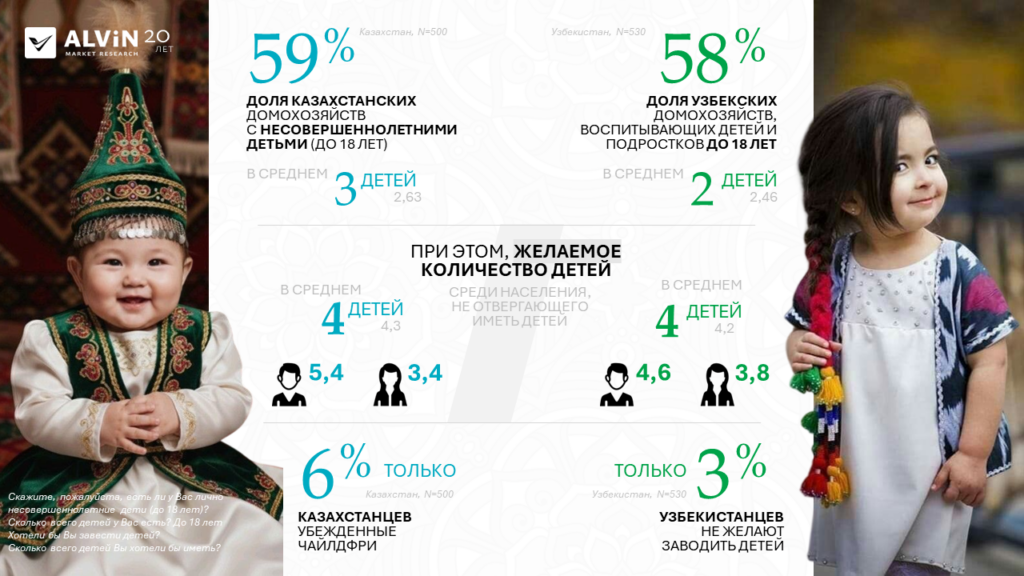
For businesses, this means long-term potential in categories related to education, child development, family leisure and healthcare.
Mistake #4: Ignoring the Economics of Family Celebrations
To an outside observer, family celebrations may seem like a cultural element. For the regional economy, they represent a distinct market.
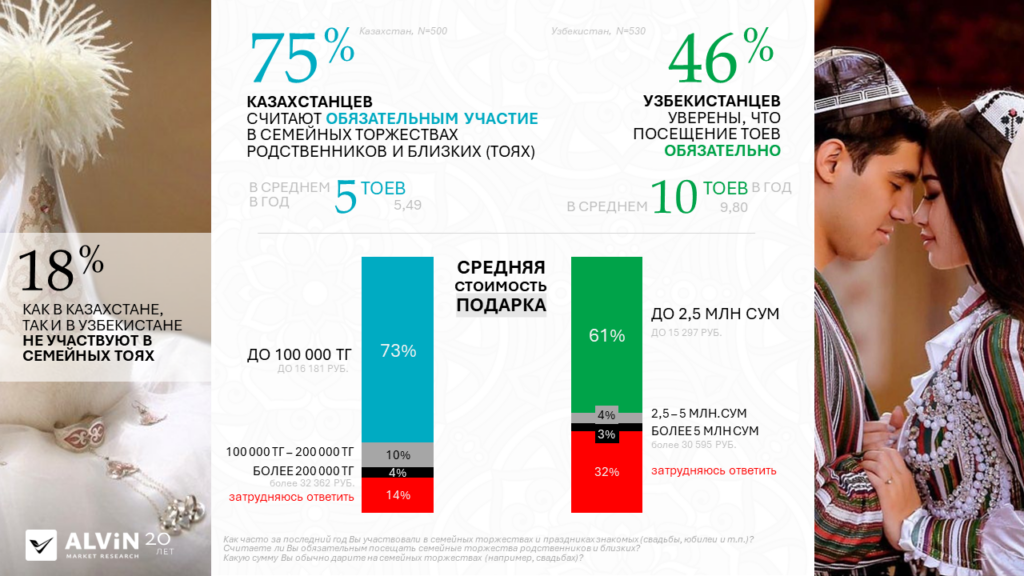
A study by Alvin Market Research shows that most residents regularly participate in family celebrations. In Kazakhstan, the average family attends about five such events per year, while in Uzbekistan, it's up to ten. Moreover, spending on gifts and attending these celebrations is perceived not as a voluntary decision, but as a social obligation.
Entire industries are formed around this culture: restaurants, catering, clothing, jewelry, gifts, financial services and credit products.
Mistake #5: Underestimating the importance of education
Education remains one of the strongest drivers of behavior in both countries.
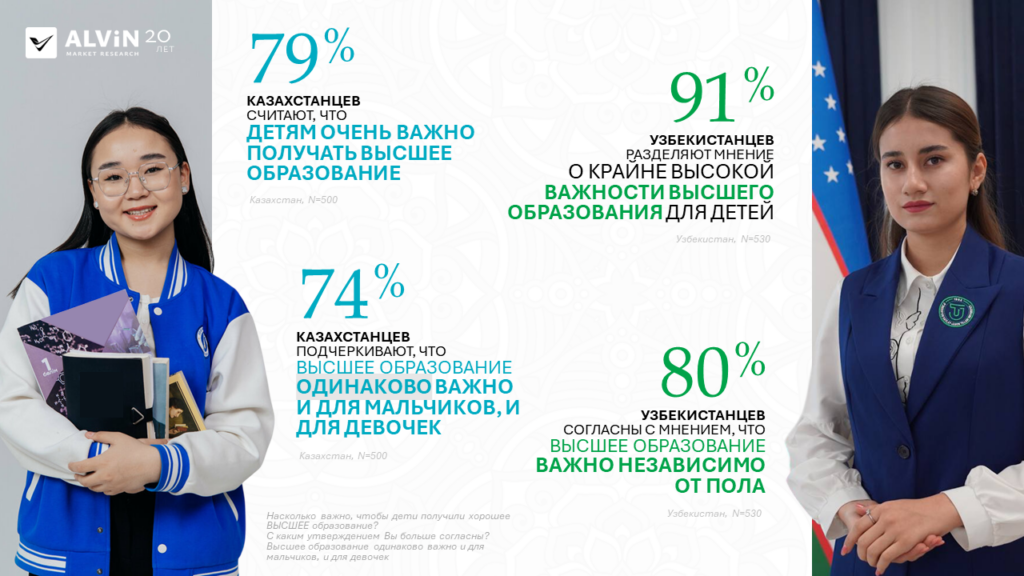
Up to 91% respondents consider higher education an important life priority. This applies not only to boys but also to girls. This is particularly important for understanding the region's transformation: traditional values here do not conflict with the desire for development and education.
For many categories of goods and services, the argument «it’s good for a child’s education» remains one of the most convincing.
Mistake #6: Using Translation Instead of Localization
One of the most important differences concerns the language of communication.
Kazakhstan remains a bilingual country, requiring both Russian-speaking and Kazakh-speaking audiences to be considered. Moreover, there are significant regional differences within the country. The situation is different in Uzbekistan: Uzbek is the dominant language, and in some regions, Tajik must also be considered.
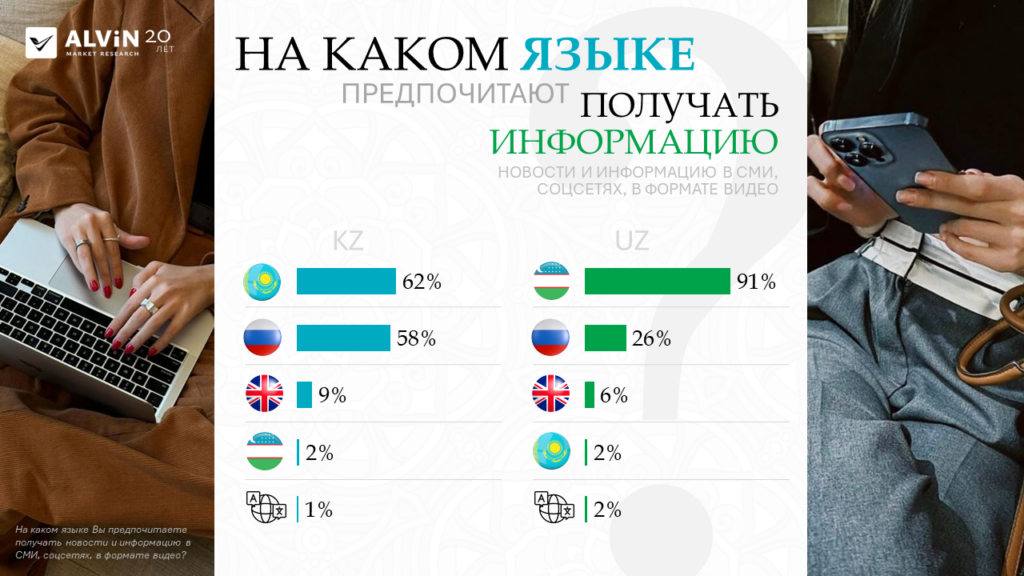
Therefore, simply translating an advertising message is rarely effective. Only full localization, taking into account the cultural context, works.
Mistake #7: Not considering religion as a factor in consumption
Islam in Central Asia is not just part of cultural identity, but a factor that directly influences consumer behavior.
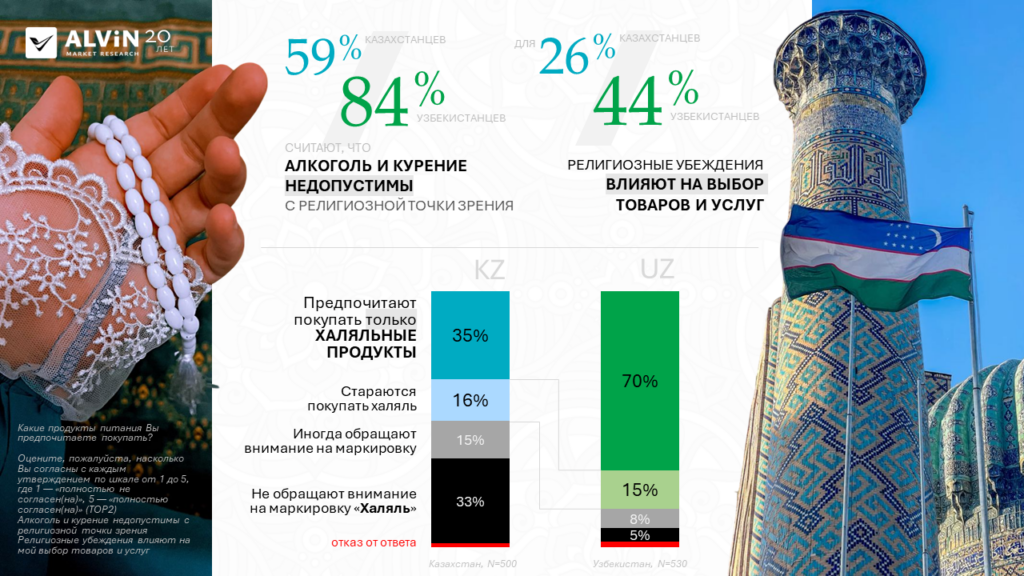
This is particularly noticeable in Uzbekistan, where religious norms influence food choices, attitudes toward certain categories of goods, and perceptions of communications. In Kazakhstan, restrictions are less stringent, but the influence of the halal agenda is also gradually increasing.
For many companies, religion remains an undervalued factor in their marketing strategy.
Mistake #8: Treating Kazakhstan and Uzbekistan the same way
Although countries are often considered together, consumer patterns differ markedly.
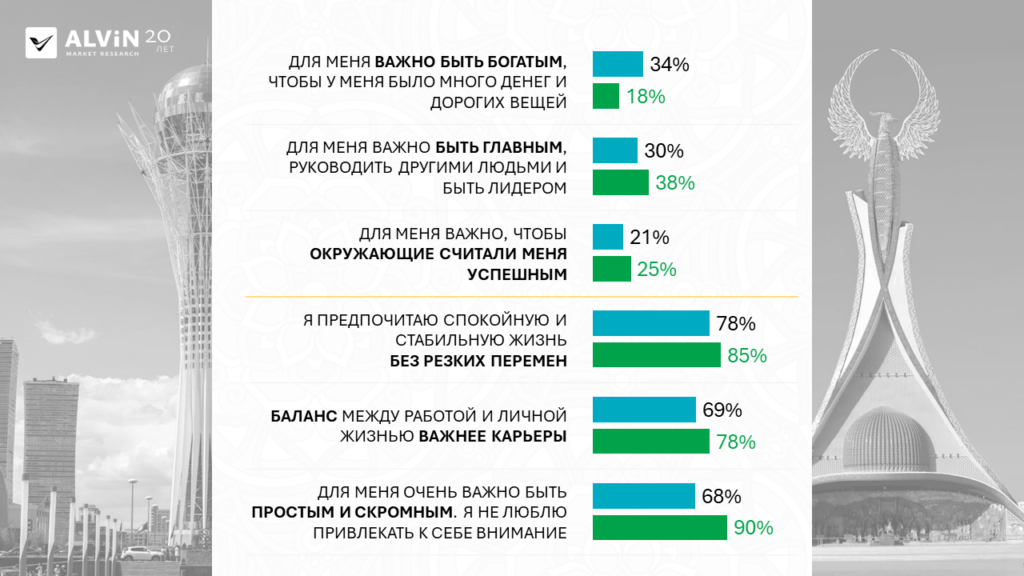
Kazakhs are more likely to prioritize mobility, career advancement, entrepreneurship, and the trappings of success. Uzbeks place greater value on stability, family ties, and social respect.
As a result, the same advertising communication can evoke completely different reactions in two countries.
Mistake #9: Not understanding your audience's financial psychology
Research shows significant differences in attitudes towards money.
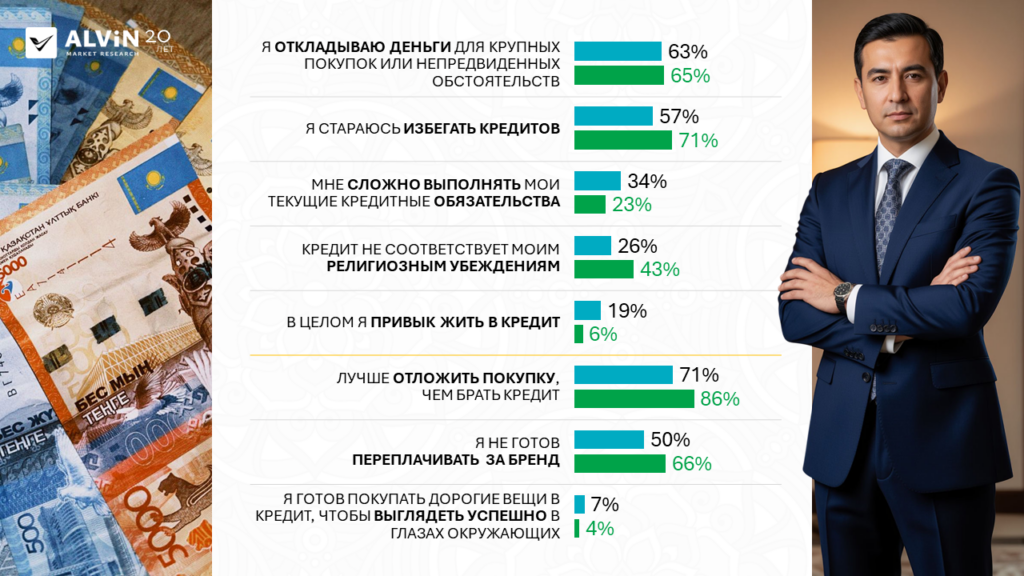
In Kazakhstan, people are more willing to use credit products, make purchasing decisions more quickly, and are more willing to pay a premium for a brand. In Uzbekistan, consumers are more cautious about borrowing and are much more careful in assessing their financial capabilities.
This means that even financial products require different approaches to positioning.
Mistake #10: Treating digitalization as the same
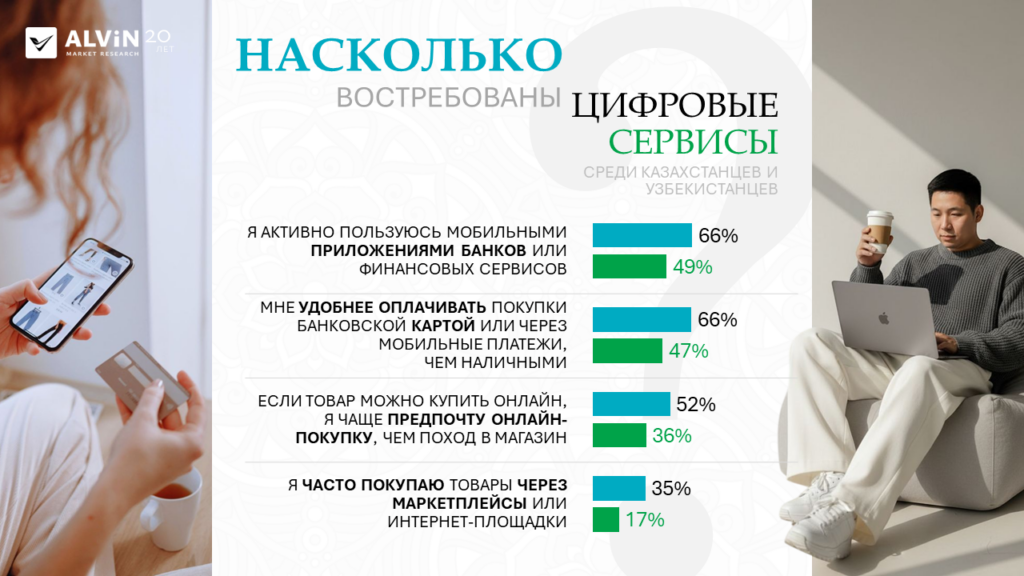
Kazakhstan today represents a mature digital ecosystem, where online shopping, mobile apps, and digital services have become part of everyday life. Uzbekistan is at an earlier stage of developing digital habits, but is developing very quickly.
Therefore, digital strategies that are successful in Kazakhstan cannot always be automatically transferred to the Uzbek market.
The main conclusion
Alvin Market Research shows that Central Asia is not a single market or a scaled-down version of other countries. Here, decisions are made not by individual consumers, but by families. Culture directly influences money. Religion influences choice. And localization is becoming not an advantage, but a prerequisite for success.
Companies that understand these nuances gain a competitive advantage even before launching their product. Those who try to work with generic templates often find that a good product doesn't resonate with their audience.
About the study
Alvin Market Research is a group of research companies. The study was conducted in Kazakhstan and Uzbekistan using telephone surveys among people over 16 years of age. Over 500 respondents were interviewed in each country, including both urban and rural residents.